
Best Mechanical Keyboards for Writers and Long-Form Typing
What a writing keyboard needs that a gaming one doesn't — comfort over hours, sound, key feel, and layout — and the reasoned criteria behind our recommendations.
Writers have the purest typing workload of anyone who buys a mechanical keyboard. There are no twitch-reaction requirements, no macro-heavy spreadsheets, just tens of thousands of keystrokes a day across mostly letters and punctuation. That simplicity changes what “best” means. For a writer, the keyboard’s only job is to stay comfortable and quiet enough that you forget it exists and stay in the sentence.
This guide lays out the criteria that actually decide whether a board is good for long-form writing, so you can identify the right one without relying on hype or a single invented score.
What actually matters for writing
Sustained comfort over raw speed
A writer is not chasing a faster actuation point; they are trying to avoid finger fatigue at hour six. That makes switch weight and travel more relevant than actuation speed. Many writers prefer a switch that is neither too light (which causes accidental presses and a vague, mushy feel) nor too heavy (which tires the hands over a long session). The sweet spot is personal, which is the strongest argument for a hot-swap board you can tune as you learn your own hands. Our switch types guide breaks down how the three families behave.
Tactile feedback versus smoothness
Many long-form typists gravitate to tactile switches because the bump confirms each keystroke without requiring you to bottom out, which can make a full day of typing feel less punishing. Others prefer the uninterrupted glide of a linear switch and a softer sound. Neither is correct in the abstract. What matters is that you can type for hours without your hands complaining, and only you can confirm that.
Sound, honestly considered
Writers often work in quiet rooms, sometimes shared ones, sometimes near a sleeping household. Sound is therefore a real criterion, not an afterthought. Clicky switches are loud by design and are usually the wrong choice for anyone within earshot of another person. Linear switches are the quietest family, and a board with good internal dampening and well-tuned stabilizers sounds composed rather than hollow. We explain why the stabilizers and keycaps matter so much to sound and feel.
A layout that never interrupts the sentence
Writers do not need a number pad, but they do need punctuation, Shift, Enter, and ideally real arrow keys for editing without lifting a hand to the mouse. A TKL or 65% layout typically serves writers well: compact enough to bring the mouse closer and reduce shoulder strain, but with every key a touch typist expects right where muscle memory left it. Our form factors guide walks through exactly what each size keeps and drops.
Keycap feel and longevity
The keycap is the only part of the board your fingertips actually touch all day. Texture is a quiet but real comfort factor over thousands of keystrokes, and durable keycaps that resist developing a slick “shine” keep the board feeling consistent for years. This is a small detail that compounds for someone typing professionally.
How we weight these criteria for writing
When we evaluate a board specifically for long-form writing, the weighting is intentional and disclosed:
- Sustained comfort — switch weight, travel, and overall feel under a long session — carries the most weight.
- Sound discipline is weighted heavily, more than it would be for gaming, because writers so often work in quiet or shared spaces.
- Layout matters but the bar is lower than for programming: writers need punctuation and arrows, not exotic layers.
- Switch family is described and explained, never ranked against itself, since preference dominates and a hot-swap board makes it reversible.
This is the same philosophy as our broader ranking methodology: the weighting follows the use case rather than hiding behind one number.
A reasoned approach to choosing
Here is the decision path we would actually follow for a writing-first board:
- Choose comfort-oriented switches, leaning tactile or medium-weight linear, and prefer a hot-swap board so a wrong guess costs a few dollars instead of the whole keyboard.
- Prioritize a quiet, composed sound — dampened case, well-tuned stabilizers, non-clicky switches — especially in any shared space.
- Pick a TKL or 65% layout so the mouse sits closer and your shoulder thanks you after a long day.
- Favor durable, textured keycaps that will not go slick and shiny after a few months of heavy use.
- Read reviews for stock stabilizer behavior, not the headline rating, because rattle is the most common reason a budget board disappoints a heavy typist.
Common mistakes writers make when buying
A few recurring missteps are worth naming, because they account for most of the regret we see from typing-first buyers:
- Buying for sound on a video instead of for the room. A board that sounds wonderful in a quiet recording can be distracting at the kitchen table next to a partner on a call. Judge sound against your actual environment, not a microphone’s.
- Chasing the lightest possible switch. Very light switches feel fast in a store but often produce accidental presses and a vague, floaty sensation over a long manuscript. A switch you can rest your fingers on without triggering is usually more comfortable across a full day.
- Over-indexing on speed specs. Actuation speed is a gaming concern. A writer’s hands are limited by endurance and accuracy, not by how early a key registers, so optimizing for that number is optimizing for the wrong thing.
- Treating a soldered board as final. Writers’ preferences drift as their hands mature over months of heavy use. A hot-swap board lets the keyboard change with you instead of becoming a mistake you typed your way into.
- Ignoring the desk geometry. A wide full-size board pushes the mouse out and quietly strains the shoulder over long sessions. For most writers the number pad is dead weight that costs comfort for no benefit.
Avoiding these five is worth more than any single spec, because each one is a way buyers talk themselves out of a board that would have served them well for years.
The honest bottom line
For a writer, the best keyboard is the one you stop noticing. That means a comfortable switch you personally like, a sound that does not intrude on you or anyone nearby, a layout that keeps punctuation and arrows where your hands expect them, and keycaps that age gracefully. None of that requires the most expensive board on the market — it requires the right properties, chosen for the way you actually work.
Related

Best Mechanical Keyboards for Gaming: What Matters
Which gaming keyboard features are real advantages and which are marketing — switches, polling, connection, and layout — with the reasoned criteria we rank by.
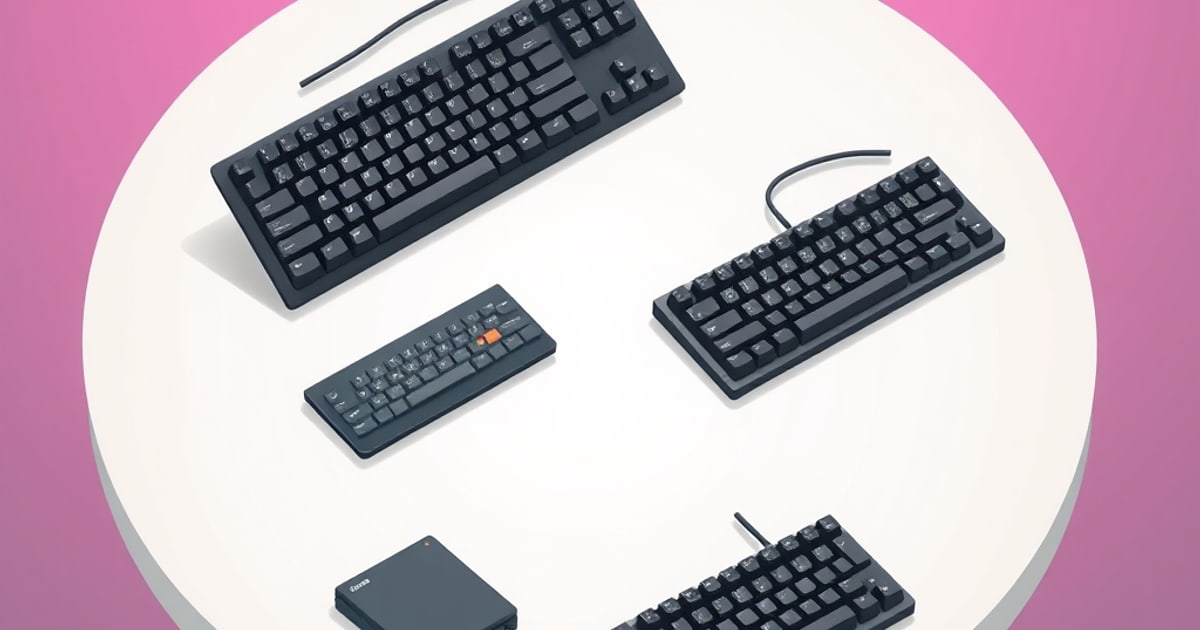
Best Quiet Mechanical Keyboards for the Office
How to pick a mechanical keyboard that is pleasant in a shared workspace — switches, dampening, stabilizers, and the reasoned criteria behind quiet-board recommendations.
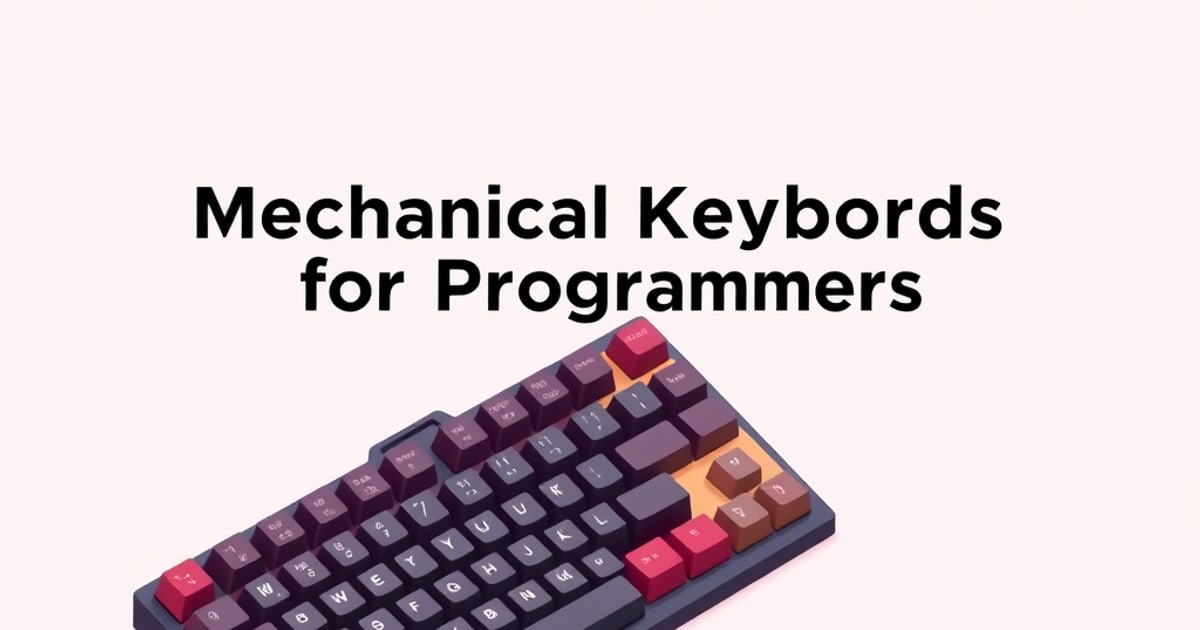
Best Mechanical Keyboards for Programmers: How to Choose
What actually matters in a programming keyboard — layout, switch feel, modifier reach, and software — plus the reasoned criteria we use to recommend boards for coding.